
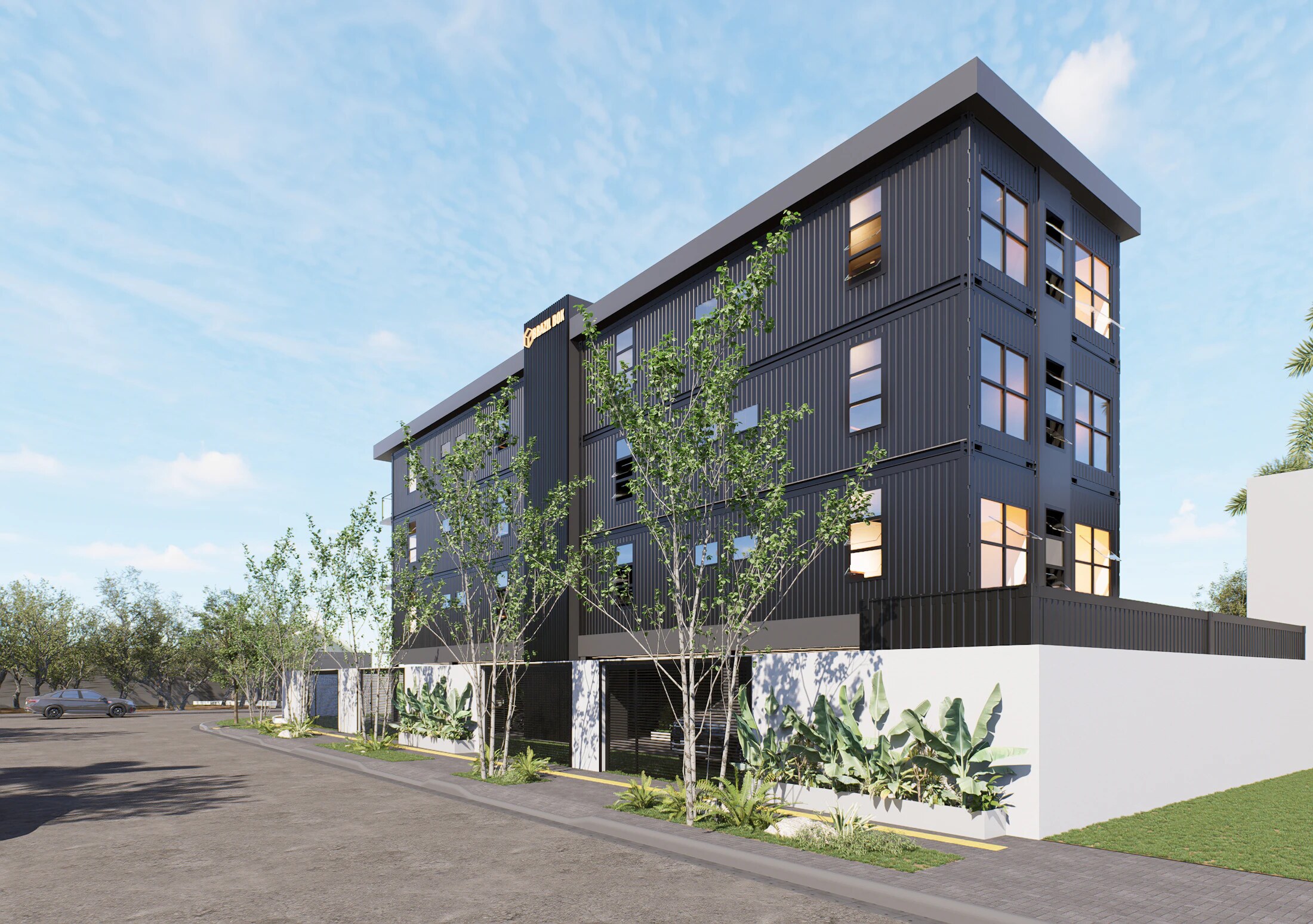

Sectors

Where could your system earn a first project?

A promising sector is not enough. The application must match the system, the complete economics, and a project able to carry the first deployment responsibly.

Systems in scope

We begin with the project constraint, not the category.

Aedvant considers physical building systems, manufacturing methods, integrated assemblies, and supporting delivery technologies. The question is whether they improve a defined project case in Chile.

  1. Systems in scope01

    Industrialized building systems

    Move repeatable work into controlled production when transport, assembly, and local interfaces can be resolved.

    Examples

    Volumetric, panelized, prefabricated, precast, and kit-of-parts systems

  2. Systems in scope02

    Integrated technical assemblies

    Preassemble services or critical components when coordination and commissioning benefit from factory control.

    Examples

    MEP racks, pods, skids, plant rooms, façades, and packaged services

  3. Systems in scope03

    Advanced materials and structures

    Evaluate a material or structural system together with its evidence, interfaces, sourcing, and intended use.

    Examples

    Mass timber, hybrid structures, engineered composites, and high-performance envelopes

  4. Systems in scope04

    Digital and automated delivery

    Use production or field technology when it addresses a measurable constraint in design, quality, labor, or sequence.

    Examples

    Digital fabrication, robotics, reality capture, BIM/VDC, and traceability tools

First-project fit

Six places to test the case.

These groups are starting points, not endorsements. Each still requires a specific use, project, counterparty, and evidence path.

01

Housing

Why it may fit
Repeated units and pressure on delivery capacity can create a case for controlled production.
What must be true
The system must meet project performance, site, approval, logistics, and cost requirements at the intended scale.
Reason to stop
Stop if repetition is too low or transport and installation erase the production advantage.

02

Hospitality and collective accommodation

Why it may fit
Repeated rooms and fixed opening dates can reward earlier coordination and offsite work.
What must be true
Operator standards, finishes, services, fire strategy, transport, and installation sequence must align.
Reason to stop
Stop if late design changes or finish variation prevent stable production.
03

Mining and remote facilities

Why it may fit
Remote sites and expensive field labor can favor work completed before materials reach the site.
What must be true
The solution must suit climate, transport, mine protocols, maintenance, and the available assembly workforce.
Reason to stop
Stop if route, lifting, or operating constraints make local construction more dependable.
04

Education and healthcare

Why it may fit
Repeatable spaces and phased capacity needs may support industrialized components or bounded assemblies.
What must be true
Safety, accessibility, comfort, specialist services, approvals, and operational continuity must be resolved.
Reason to stop
Stop if project-specific clinical or educational requirements eliminate useful repetition.
05

Data centers and technical facilities

Why it may fit
Repeated technical rooms and critical interfaces can benefit from controlled assembly and traceability.
What must be true
Power, cooling, redundancy, commissioning, security, structural loads, and support responsibilities must be explicit.
Reason to stop
Stop if the supplier cannot support integration, commissioning, and change control locally.
06

Temporary, relocatable, and public infrastructure

Why it may fit
Rapid or repeated deployment can justify systems designed for transport, assembly, and reuse.
What must be true
Procurement, safety, habitability, maintenance, approvals, disassembly, and storage must fit the operating model.
Reason to stop
Stop if temporary status is being used to avoid requirements that still apply to the project.
  1. 01

    Defined need

    The project has a measurable constraint in performance, cost, schedule, quality, labor, or logistics.

  2. 02

    Technical fit

    Available evidence can be assessed against the use, site, interfaces, and applicable requirements.

  3. 03

    Complete economics

    The comparison includes transport, importation, installation, commissioning, support, and risk.

  4. 04

    Capable counterparties

    The provider and project team can supply evidence, make decisions, and resource a bounded first deployment.

  5. 05

    Useful proof

    The first project can produce documented findings that inform a clear next decision.

Entry assessment

Bring one system and one intended use.

The first discussion should identify the project problem, available evidence, intended Chilean application, and the decision you need to make.